
Malta is small, but it packs in more than most countries ten times its size: 7,000 years of history, three UNESCO World Heritage Sites, clear blue water, lively festivals and some of the best food in the Mediterranean. Whether you’re here for a long weekend or a full week, this guide covers the best things to do in Malta and Gozo, with tips on when to go and how to get there.
Planning your days? See our Malta itinerary for 3, 5 and 7 days, and check the Malta events calendar for what’s on during your trip.
Malta at a glance
- Islands: Malta, Gozo and Comino
- Capital: Valletta
- Languages: Maltese and English (almost everyone speaks English)
- Currency: euro (€)
- Best time to visit: April to June and September to October
- Getting around: buses, ferries and ride-hailing apps
Valletta and the Grand Harbour
1. Explore Valletta
Malta’s capital is a UNESCO World Heritage city built by the Knights of St John in the 1500s. Walk Republic Street and Merchants Street, wander the steep side streets with their colourful wooden balconies, and stop for a coffee in one of the squares.

2. See Caravaggio at St John’s Co-Cathedral
The plain outside hides one of Europe’s most spectacular baroque interiors, with a gold-covered nave and Caravaggio’s famous Beheading of Saint John the Baptist. Go early to avoid the queues.
3. Watch the noon gun at the Upper Barrakka Gardens
These gardens have the best view of the Grand Harbour and the Three Cities. Every day at noon, the Saluting Battery below fires a cannon salute.

4. Cross the harbour to the Three Cities
Take the short ferry or a traditional dgħajsa water taxi from Valletta to Birgu, Senglea and Cospicua. Birgu’s quiet streets, Fort St Angelo and the waterfront are perfect for an afternoon.
History and culture
5. Walk the Silent City of Mdina
Malta’s old capital sits on a hilltop in the centre of the island. Its narrow, quiet streets are magical in the late afternoon. Visit St Paul’s Cathedral, walk the bastions for a view over the whole island, then explore St Paul’s Catacombs in neighbouring Rabat.

6. Visit the prehistoric temples
Malta’s megalithic temples are older than Stonehenge and the Egyptian pyramids. Ħaġar Qim and Mnajdra sit on the south coast with sea views, and Ġgantija in Gozo is one of the oldest free-standing buildings in the world.

7. Book the Ħal Saflieni Hypogeum
This underground burial complex, carved into rock around 5,000 years ago, is one of Malta’s most unique sights. Daily visitor numbers are very small, so book weeks in advance.
8. Catch a village festa
From May to September, villages celebrate their patron saints with brass bands, fireworks, street decorations and food stalls. It’s the most authentic Maltese experience you can have. Look for festas in our Festas & Traditions calendar.
Sea, beaches and boat trips
9. Swim in the Blue Lagoon, Comino
The tiny island of Comino is home to the famous Blue Lagoon, with incredibly clear turquoise water. Boats run from Ċirkewwa, Mġarr (Gozo) and the Sliema area. Go early or late in the day to avoid the crowds, and check before you go whether a free visitor booking is needed.

10. Relax on Malta’s best beaches
Golden Bay, Għajn Tuffieħa and Mellieħa Bay are the top sandy beaches on Malta, and Ramla Bay in Gozo has famous red-orange sand. See our full guide to the best beaches in Malta and Gozo.
11. Take a boat into the Blue Grotto
Small boats from Wied iż-Żurrieq take you into sea caves where the water glows bright blue. Morning is best for the colours, and boats only run when the sea is calm.

12. Jump into St Peter’s Pool
A natural rock pool near Marsaxlokk with flat rocks for sunbathing and deep, clear water for swimming. There are no facilities, so bring water and shade.
13. Go snorkelling or diving
Malta is one of Europe’s top diving destinations, with clear water, caves and wrecks. Even simple snorkelling at spots like Għar Lapsi or Wied il-Għasri in Gozo is rewarding.
Gozo and day trips
14. Spend a day in Gozo
Gozo is greener, quieter and more rural than Malta. Visit the Citadel in Victoria, Ġgantija Temples, Dwejra and Ta’ Pinu Basilica, then have dinner by the sea in Xlendi or Marsalforn. Our Gozo day trip guide explains how to plan it.
15. Visit Popeye Village
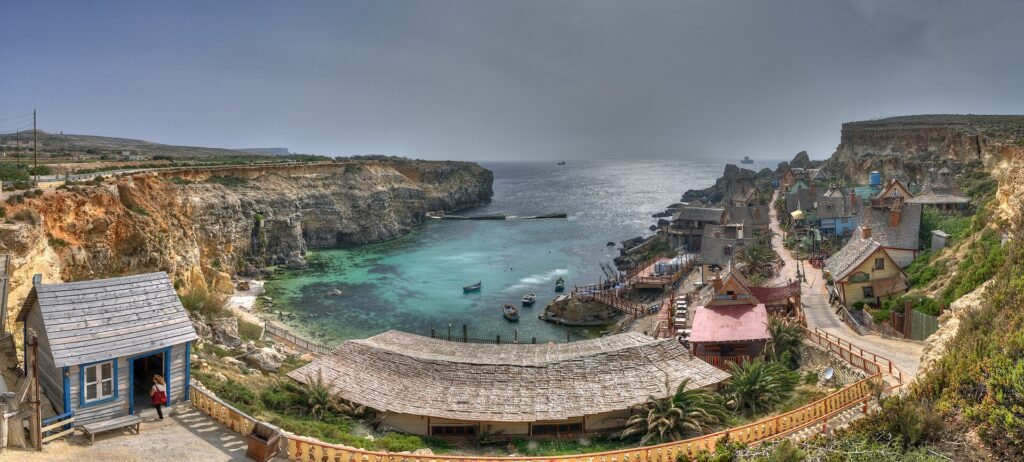
The colourful film set built for the 1980 Popeye musical is now a family attraction overlooking Anchor Bay in Mellieħa. Even if you don’t go in, the view from the opposite side of the bay is lovely.
16. Sunday morning in Marsaxlokk
Malta’s main fishing village is famous for its colourful luzzu boats and Sunday fish market. Stay for a seafood lunch by the harbour.
17. Walk the Dingli Cliffs
Malta’s highest cliffs rise straight out of the sea on the west coast. Come for sunset, then have dinner in one of the nearby restaurants.
Food, drink and nightlife
18. Eat like a local
Try a hot pastizz (flaky pastry filled with ricotta or peas), ftira sandwiches, rabbit stew (stuffat tal-fenek), fresh fish and a cold Kinnie or Cisk beer.
19. Visit a Maltese winery
Malta and Gozo produce good local wines. Several wineries offer tours and tastings, and summer wine festivals are a highlight of the calendar.
20. Enjoy a night out in St Julian’s
Paceville is Malta’s main party area, while Valletta’s Strait Street is great for a relaxed drink. Read our guide to the best party places in Malta.
Events and festivals
21. Go to a festival or concert
Malta has a packed events calendar all year: the Fireworks Festival in April, summer music festivals, Notte Bianca and BirguFest in October, Christmas markets in December and Carnival in February. See what’s on in our Malta events calendar.
22. See a show at Teatru Manoel
Built in 1731, it’s one of the oldest working theatres in Europe. Even a short guided tour is worth it.
More great experiences
23. Walk the Sliema promenade
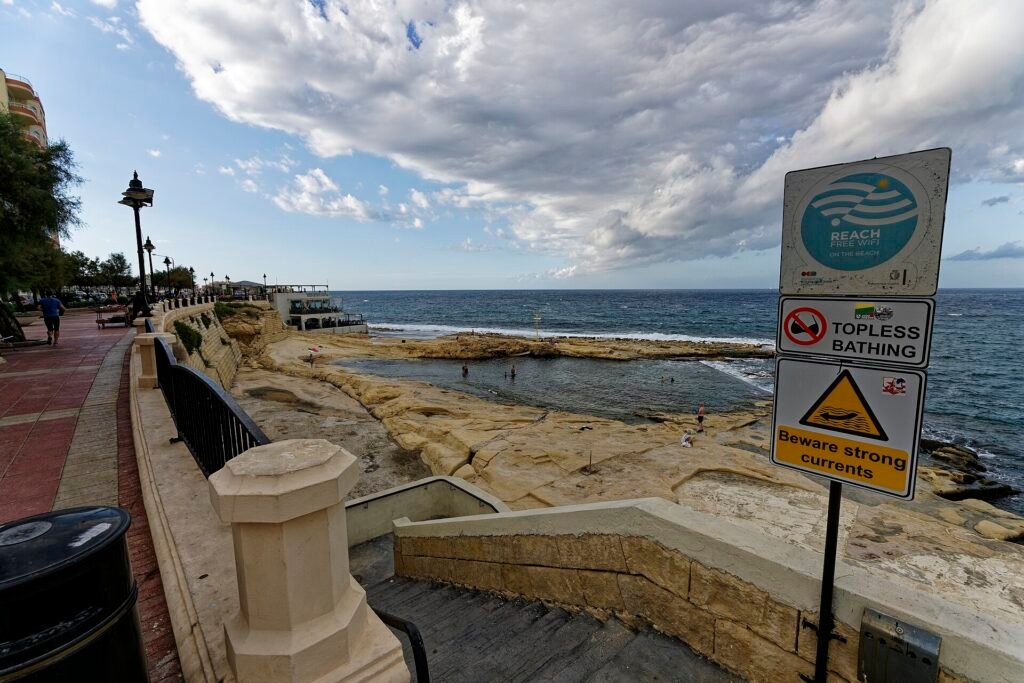
The seafront walk from Sliema to St Julian’s is perfect at sunset, with views across to Valletta and plenty of cafés along the way.
24. Ride the Valletta–Sliema ferry
The short ferry ride across Marsamxett Harbour is cheap, quick and gives you the best view of Valletta’s skyline.
25. Watch the sunset at Golden Bay
Malta’s west coast faces the sunset. Golden Bay and the hill above Għajn Tuffieħa are two of the best spots to end the day.
Tips for visiting Malta
- Getting around: buses cover the whole island, but ride-hailing apps are faster. Read our guide to getting around Malta.
- Book ahead: the Hypogeum, popular restaurants and summer boat trips fill up early.
- Summer heat: July and August are very hot, so plan sightseeing for mornings and evenings.
- Dress code: cover shoulders and knees when visiting churches.
Frequently asked questions
What is Malta best known for?
Malta is known for its 7,000 years of history, the Knights of St John, Valletta, prehistoric temples, clear blue sea, the Blue Lagoon and lively village festas.
How many days do you need in Malta?
Five to seven days is ideal to see Valletta, Mdina, the beaches and Gozo without rushing. Three days is enough for the highlights.
Is Malta good for a holiday?
Yes. It’s safe, English-speaking, compact and sunny for most of the year, with history, beaches, food and nightlife all close together.
What is the best month to visit Malta?
May, June, September and October offer warm weather, a warm sea and fewer crowds than July and August.
Is Gozo worth visiting?
Definitely. Gozo is greener and quieter than Malta, with great scenery, Ġgantija Temples, the Citadel and some of the best diving in Europe.
Pingback: Gozo Day Trip from Malta: Ferry, Itinerary & Top Sights - Events Malta
Pingback: 15 Best Beaches in Malta and Gozo (Sandy & Rocky) - Events Malta
Pingback: Getting Around Malta: Buses, Ferries, Bolt, Taxis & Car Hire - Events Malta